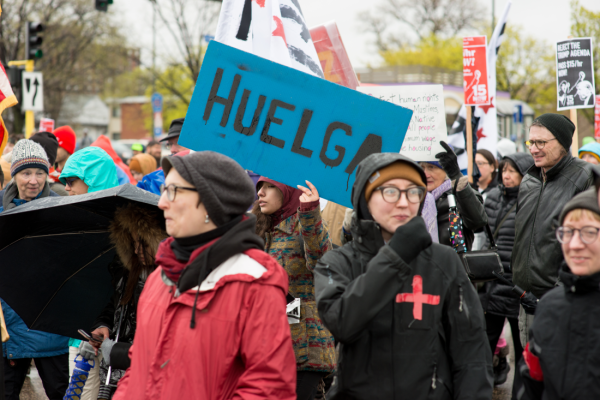
It’s been one year since the people of Minnesota became a model to the nation for fighting the Trump administration’s authoritarian push. Their efforts hinged on standing against ICE’s mass detentions and deportations of immigrants. And Minnesotans are leading the way in resisting the related federal attacks on free speech and the right to protest.
This mobilization was built on a long history of labor and radical activism in Minneapolis and St. Paul, and the more recent massive 2020 protests provoked by the police murder of George Floyd. This kind of activism is more important than ever as the federal government expands its attempts to shut down free speech and the right of assembly under the pretense of fighting “terrorist conspiracies.” The rest of the country can learn much from this movement that is in the forefront nationally.
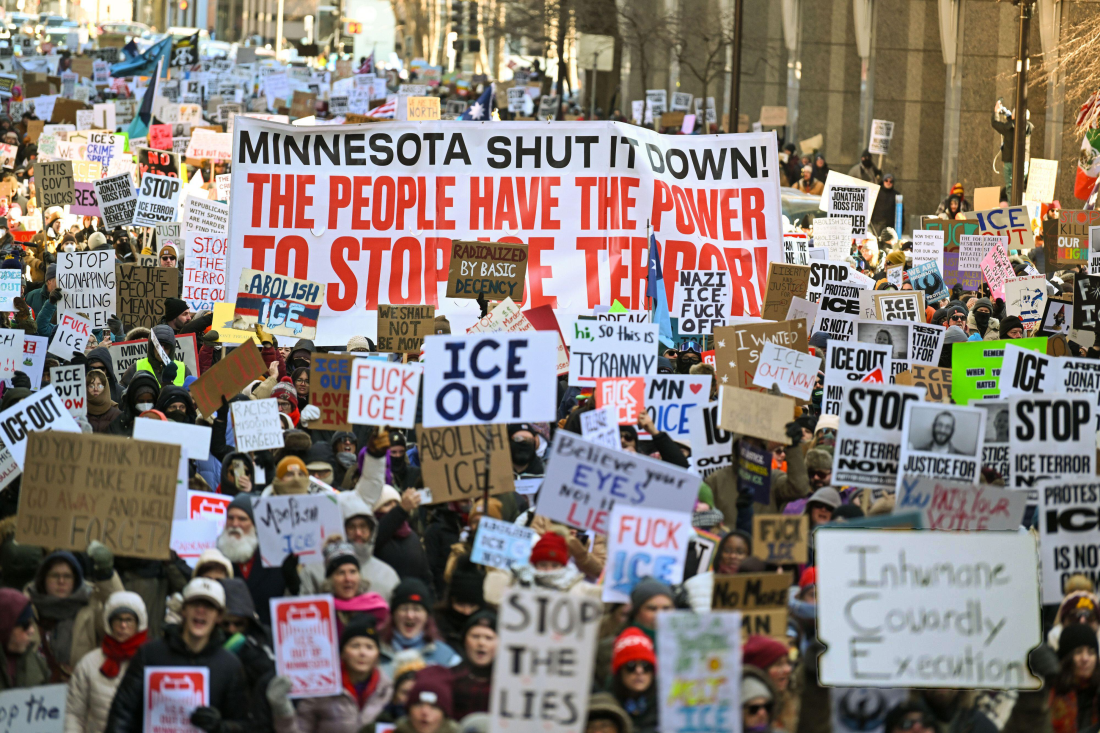
When many people think of Minnesota today, they picture the massive demonstrations at the beginning of the year. Let’s look in more detail at how events unfolded.
Longterm mobilization
The Trump administration started “Operation Metro Surge” in December 2025 with an invasion of approximately 3,000 federal immigration agents. The assault was sparked by a right-wing website publishing unfounded charges of welfare fraud in the Somali immigrant community. The city came alive with protests in defense of the immigrants and opposition to the federal onslaught.
In the midst of this furor, Renee Good was killed by ICE while participating in a Jan. 7 mobilization to protest the unprecedented deployment of huge numbers of masked, armed federal agents. The attacks continued with the Jan. 14 shooting of legal resident and Venezuelan, Julio Cesar Sosa-Celis.
Within a few days, a coalition of unions, faith groups and community organizations came together and called for a day of “no work, no school, no shopping” on Jan. 23.
That day featured a massive demonstration of at least 50,000 people, even though temperatures were below zero. Strikes, civil disobedience and arrests were part of the economic shutdown, while hundreds of businesses closed their doors. The very next day, Jan. 24, ICU nurse Alex Pretti was killed during another immigration protest, shot 10 times by two ICE thugs. There was another huge demonstration on Jan. 30, in the Twin Cities and around the country, again calling for “no work, no school, no shopping” and demanding that ICE be immediately dismantled.
The Jan. 23 and Jan. 30 days of action, though massive, were not general strikes. Labor was not organized enough to be able to shut down the whole city. Both mobilizations were called on relatively short notice and were inclusive of faith-based and community organizations as well as unions. In fact, much of the labor involvement was by rank-and-file workers rather than their leadership.
Still, people kept showing up in freezing weather, refusing to be intimidated or silenced. They also worked behind the scenes, creating aid networks for immigrants who couldn’t go out to work or shop. This activism has continued over the months since. That the fervor hasn’t died down is what makes it so
impressive.
A militant history
Activists note that the community organizing methods and networks developed during the protests of the police murder of George Floyd in 2020 have been maintained. This is why the organizing this year was so effective right from the start.
In 2020, the cold-blooded killing of Floyd, who repeatedly pleaded “I can’t breathe,” went viral after being recorded by a bystander and sparked weeks of protests in the city. It ignited demonstrations in 140 U.S. cities and around the world.
During the local organizing in Minneapolis after Floyd’s death, people learned how to maintain readiness for community self-defense, and those lessons have persisted.
In fact, the city has an even longer history of labor militancy. The 1934 Teamsters strike, which turned into a massive general strike that shut down the city, led to regional organization of the trucking industry throughout the Midwest and helped spark the formation of the Congress of Industrial Organizations (CIO). This development was led by Trotskyist labor activists who were members of the Communist League of America, which later formed the Socialist Workers Party.
These traditions of organizing and solidarity have laid down the framework that the ongoing work is built on. After January 2026, mobilization continued. Federal agents also stayed and extended their surveillance and repression.
The Minnesota 15 conspiracy case
In June, a group known as the Minnesota 15 were indicted and charged with conspiracy to impede federal agents during Operation Metro Surge. They are labor activists who attended a workers’ assembly in February on building the movement against ICE. Case documents show that undercover federal agents infiltrated and reported in detail on the gathering.
Such spying on activists wasn’t limited to Minnesota. The Chicago Tribune reported that federal agents attended a worker assembly there last summer. The Broadview Six were indicted for supposedly impeding an ICE agent’s vehicle during a Sept. 26, 2025, protest. Those charges have since been dropped.
Sustained organizing in defense of immigrants endured in Los Angeles this year, and in New York City and New Jersey for those inside the Delaney detention center. This country needs its 51.9 million immigrants, who are 15.4% of the population.
Still, Minneapolis is a leader in standing up to the authoritarian drive of the administration, which shows no signs of slowing down. Rely on the lessons of labor militancy, unite in action based on unions and community organizations, defend those who are under attack, and never give up!
Send feedback on this article to FSnews@socialism.com.