
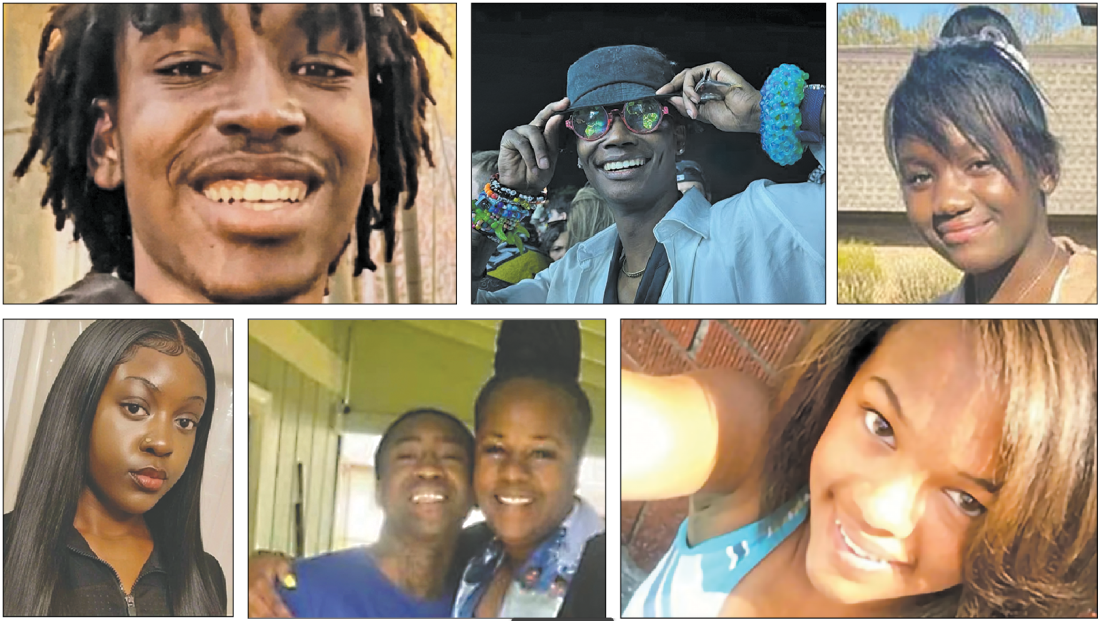
The erasure of Black people’s deaths is an outrageous staple of the United States and many other wealthy western countries. One day, a jury declines to indict any perpetrator in Nolan Wells’ death, despite an independent autopsy ruling out accidental drowning. The next, the Mississippi Attorney General rules the killing of Kohen Wiley, a one-year-old child, as “justified” despite no evidence that the police officer involved was in any danger.
Almost every day, there is a new, yet all too familiar, story of Black people losing their lives to violence.
In the words of Billie Holiday, all we see are the familiar images of “Strange Fruit” hanging.
Horrific history
Lynchings litter both the past and present of U.S. history. The NAACP identified more than 4,743 lynchings from 1881 to 1968 — and those are just the ones they could find, with countless more held only by memory. A lynching, as defined by the NAACP, is the public killing and torture of a person who has not received any due process, often done by a mob. They not only were distinct for their barbarity, but for the spectacle that surrounded them, as whole communities would attend these violent displays.
Ultimately, the culture of lynching stripped the Black community of economic independence to maintain a white-only upper class. Lynch mobs often fabricated “crimes” against Black people who threatened a “white rule” — a rule that required Black communities’ racial and material subjugation. Lynchings also distracted the white working class to focus on destroying the material gains of the Black community rather than ally with them against economic exploitation.
All-in-all, lynching reinforced not only the hold of white supremacy on the U.S., but the dominance of capitalism across the country.
The modern and global devaluation of Black lives
FBI data in 2020 shows that homicides involving Black victims are 50% less likely to be solved than those with white victims. Abroad, the Guardian found that Black victims account for 73% of all unsolved homicides in London between 2019 and 2023.
Similar to the past, this erasure only propagates apathy towards Black victims instead of an urgency to dismantle the systems that create such disparity.
This reality is not isolated to homicides, but is also present in the erasure of genocides in the Congo and Sudan, which not only stem from the damage done by Belgian and British colonization, but also center around the exploitation of resources by foreign powers in both countries.
Even in the present, capitalism and the erasure of Black victims are intrinsically interlinked.
Black people stand up and fight back
However, resistance to erasure is as alive as the violence itself. Ida B. Wells dedicated her life to investigating lynchings across the U.S. South. She wrote about her investigations in countless letters and news articles shared in Black-owned newspapers across the country in the 19th and 20th centuries.
In the present day, Black families, like Nolan Well’s parents, fight their local governments and ally with their community in the hope of bringing their loved ones justice. Worldwide, Black people and our allies campaign to expose and oppose the Congo and Sudan genocides that are regularly overlooked.
The ruling class may see Black lives as expendable, but we show time and time again that we refuse to be contained by the hate against us — we always stand up and fight back.






