The View from Here: Conversations with Gay and Lesbian Filmmakers by Mathew Hays.
Arsenal Pup Press, 2007. ISBN 978-1-55152-220-3. 384 pages.
The View from Here is rich in its diversity. Mathew Hays, a film critic and author with
the Montreal Mirror since 1993, conducts 32 interviews with directors and screenwriters
about their work. He gives each filmmaker a short sub-title to sum up their work.
David Secter is dubbed “Queer Pioneer,” Annie Sprinkle earns the descriptor “Sexual
Chameleon,” Monica Treut is labelled “Gender Outlaw,” while John Waters is “The Pope
of Trash.”
Some of those Hays speaks with are mainstream big budget filmmakers such as Randal
Kleiser who directed the 1978 musical, Grease, Gus Van Sant who directed Good Will
Hunting and Bill Condon who made the 2006 hit, Dreamgirls.
Others, such as documentary filmmaker, Arthur Dong, who was born in San Francisco
to Chinese immigrant parents, work more from the margins. Dong has produced a
trilogy exposing anti-gay sentiment. Coming Out Under Fire is a response to the Clinton
administration’s “don’t ask, don’t tell” policy imposed on gays and lesbians in the
military. His 2002 film, Family Fundamentals, tells the harrowing saga of Christian
fundamentalist families who have disowned queer offspring. Licensed to Kill gives voice
to convicts jailed for murdering gay men: a theme inspired by Dong’s own brush with
gay bashers in San Francisco’s Castro district in the late ’70s.
Hays draws fascinating material from each interviewee. He probes how they were
attracted to filmmaking, their work and the political context, and how their sexuality
influences their creativity. He does not impose a rigid format. Speaking about the book,
Hays comments: “I wanted each chapter to be about each person’s passions….The
biggest divide I noticed was the difference between fiction and non-fiction filmmakers.
Fiction filmmakers are prone to say they’re not really activists but rather filmmakers just
telling stories. Whereas the documentary filmmakers are much more prone to say they
come from an activist background. They do what they do in part to change the world.”
From Almodovar to Waters. The book opens with Spanish queer filmmaker Pedro
Almodovar whose 2006 hit film Volver, the quirky tale of female solidarity, resonates
with feminist viewers. Raimunda, played by Penelope Cruise, attempts to dispose of
the body of her violent husband after her daughter accidentally kills him. She then
finds herself confronted by the apparent ghost of her mother. Almodovar reflects on
what influences his work: being gay, being Spanish and being born in a democracy —
“these circumstances come together in my work unconsciously.” He wouldn’t work in
the Hollywood system: “My ambition is to be completely involved in the story that I
am telling…In Hollywood, there are so many people giving their opinions, powerful
opinions, and the director is one of fifteen people making the decisions in one movie.”
The book closes with a conversation with John Waters, whose early films include Pink
Flamingos, Polyester and Hairspray. Through his films, Waters set out to shock and
disrupt the status quo. He describes how Pink Flamingos had no critical support: “I
like the idea that the film became huge, not through money or marketing or any of the
things that run Hollywood today.” Waters is “totally against isolation and segregation.”
He considers himself “an activist who is gay. Gay is not enough. All gay films aren’t
necessarily good.” Waters appeared on The Simpsons, a proud moment for him,
especially when he got a phone call from his ten-year-old nephew to compliment him. “In
some ways it is much braver to say you are gay on The Simpsons than in The Advocate.”
Waters describes the ’70s as “gloriously happy and joyous” and yearns for the younger
generation of filmmakers to start making movies “that make me nervous.”
Girls on film. Hays probes the art and politics of filmmaking with Canadian lesbian duo,
Janis Cole and Holly Dale. Cole and Dale teamed up to make gritty documentaries with
feminist themes. P4W Prison for Women is a 1981 feature, set in Ontario. The women are
clear that all filmmakers have a perspective and they share a deep sense of solidarity with
the inmates. Several of the women were released as a result of campaigns demanding
justice sparked by the film.
Holly and Dale’s next project, Hookers on Davie, released in 1984, documents the lives
of sex workers on Vancouver’s Davie Street. They show the dangers of sex work and
the incredible solidarity between women and transsexuals: “The drag queens punched
out the pimps for the real girls and the real girls made the drag queens blend in like
they were ‘real girls.’ At its core, Hookers was truly feminist.” But Holly and Dale
encountered a lot of criticism for their positive portrayal of male to female transsexuals
and respect for their preferred gender identity.
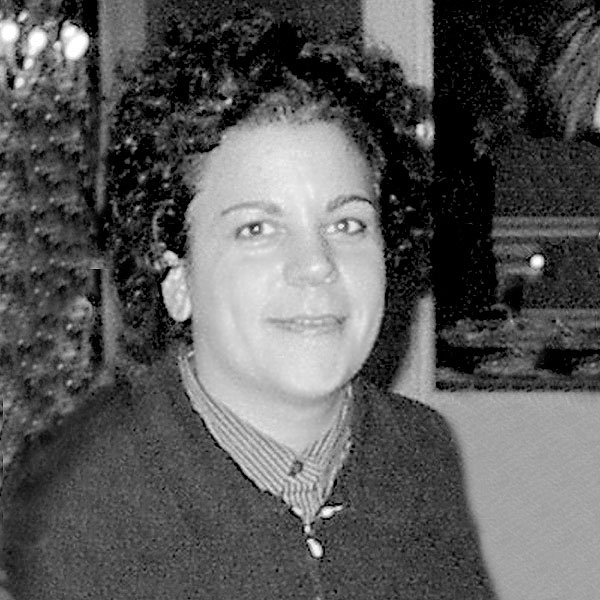
Rose Troche, director of Go Fish.
Hays also spoke to the filmmakers who made two of my favourite lesbian films of
the ’90s, Go Fish and When Night is Falling.
In 1994, Rose Troche made the charming lesbian romantic comedy, Go Fish. The quirky
film about a group of friends searching for happiness was a hit on the film festival circuit.
It also found an instant audience among lesbians who lapped up a film whose characters
were likable and did not end up dead, straight or suffering. Troche and her then partner,
Guinevere Turner, who she met through ACT UP, decided to make a film together: “we
also wanted to include the activism that we were both involved in.” Troche says that the
film was also popular among gay men: “When so many gay men were affected by the
AIDS crisis, Go Fish became an escape for them.” After the success of her first film,
Troche found herself labelled the lesbian filmmaker and expected to make a “bigger
and better Go Fish.” Although she resisted this label for some years, she now writes and
directs for the lesbian soapie, The L Word. But Troche, who comes from a working class
Puerto Rican background, is not a fan. She says: “I want to be irreverent. I want to be
political. Gay has become so superficial. It’s become ‘what am I going to wear to this
event.’ To an extent, The L Word has helped to perpetuate this.”
Hays’ interview with Patricia Rozema is also fascinating. Rozema grew up in a strict
religious family and shot to critical acclaim in 1987 with I’ve Heard the Mermaids
Singing. Her third film, When Night is Falling, is perhaps the most erotic lesbian
love story ever filmed for mainstream release. Camille, an uptight and conservative
woman working as a professor at a large urban university, finds herself strangely
attracted to Petra, a free-spirited woman who works at a local carnival that comes to
town. To evoke a shameless romantic rapture, the film uses light and colour, “gold and
burgundy and warm woody colours,” in a way that has no real precedent in movies about
homosexuality. Rozema describes it as a standard love story.
Rozema switched pace for her next big film, an adaptation of Jane Austin’s Mansfield
Park, released in 1999. She weaves a strong anti-slavery theme through her version. She
told Hays: “I didn’t want to do another English dance party…I wanted the audience to get
a better understanding of what Austin knew by showing a bit more of the debate that was
raging at the time of the novel’s publication.”
Queer docos. Hays’ conversation with Lynne Fernie and Aerlyn Weissman, who
produced the fabulous documentary Forbidden Love: The Unashamed Stories of Lesbian
Lives, is gripping. The women filmed older lesbians who talk about life in Toronto,
Vancouver and Montreal in the ’50s and ’60s when being gay guaranteed a life of
police harassment, family disapproval and discrimination at work. To do the research
for their film, rather than searching under “lesbian” they had to search under “police”
and “crime.” They also got pressure to leave some parts out: “The worst thing someone
wanted us to get rid of in the fine cut was Lois saying, ‘I think post-menopausal women
should run the world.’”
Hays’ interview with Robert Epstein brings home just how much influence documentary
filmmaking can have. Epstein was part of the team that made the landmark 1978
documentary, Word is Out. I remember watching this documentary, based on interviews
with gay men and lesbians, in 1979. I was blown away by so many gay and lesbian
stories told with such raw power. Several of the documentary filmmakers featured in The
View From Here speak of the impact Word is Out had on them. Robert Epstein went on
to make an impressive collection of celebrated documentaries, including The Times of
Harvey Milk and Common Threads: Stories from The Quilt.
Shaping the culture. As each filmmaker settles into their relaxed and unique
conversation with Mathew Hays, it can be hard to draw common threads. All that these
filmmakers really have in common is that they are gay, lesbian or otherwise queer. But
despite the diversity — from romance to erotica, from political documentary to camp
trash — all of these filmmakers operate in broadly the same environment. Consequently
two cultural references keep popping up — Vito Russo’s important 1981 study, The
Celluloid Closet, and Brokeback Mountain, the 2005 drama that depicts the complex
romantic and sexual relationship between two American cowboys.
The Celluloid Closet, made into a documentary by Robert Epstein and Geoffery
Freidman in 1995, analyses queer portrayals in over 300 films. Russo’s research found
that before the 1930s, homosexuals were often presented as objects of ridicule. In 1934,
the Hays Code mandated that “sex perversion or any inference to it be forbidden on the
screen.” In the 1960s and ’70s, although the code was loosened, gay men and lesbians
were usually portrayed as depraved or dangerous. Homophobic stereotypes in the movies,
Vito Russo argued, not only reflected the prevailing oppression of gay men and lesbians,
but also helped perpetuate it. The filmmakers whom Hays interviews are not primarily
makers of gay and lesbians films; they are openly queer women and men whose world
view has been shaped by their experience.
In 1980, I was a member of the Coalition Against Cruising. With other gay liberationists,
I stood outside the Cinema Centre in Bourke Street to protest and educate about this
virulently homophobic film in which Al Pacino played an undercover cop seeking
out a serial killer in the gay male leather scene. Thousands of gay men and lesbians
demonstrated against the film during its production in the U.S. and, as a result of the
disruption, it came in 60% over budget.
Vito Russo described how the 1970s were characterised by a newly aggressive and
vitriolic homophobia on the big screen, as evidenced by Cruising. Homosexuality was
equated with something to be feared and something that inevitably produces violence.
But the Gay Liberation Movement was not going to take it anymore. Getting angry about
the shortcomings being dished up by a homophobic movie industry was the first step
towards producing queers on screen who changed the patterns, so skilfully documented
by Vito Russo.
The movement created the space for the filmmakers in The View From Here. And many
of them are clearly a proud part of it. The work of these filmmakers, combined with the
work of heterosexual directors such as Ang Lee who directed Brokeback Mountain, have
brought Ennis and Jack to the big screen. May there be many more!