
I love studying history. But it is not the ruling class, great men, nationalist bunkum that
I was dished up at high school in the seventies that gets me excited. There’s been an
outpouring of historical writing that tells stories of resistance. Feminist, anti-colonial,
queer, Indigenous and labour historians — both academics and grassroots enthusiasts
from the movements — have uncovered and popularised a wealth of hidden history.
From their work, we find foremothers and forefathers who we can look up to, learn from
and model ourselves upon. One such leader is the little known socialist feminist, Dr
Antoinette Konikow.
Discovering a gem. Last year, I spent four weeks in intense study at a Freedom Socialist
Party (FSP) Leadership School in Sahale, Washington. The FSP convention in January
2006 decided to organise such schools as a way to strengthen leadership by passing on a
wealth of accumulated knowledge and experience, drawn from Marx on down to the FSP
leaders of today.
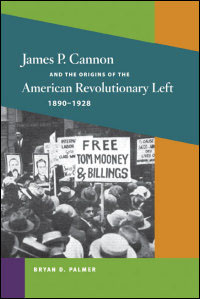
At the school, I spent days immersed in a new biography of James P. Cannon, the
founder of the U.S. Trotskyist movement. James P. Cannon and the Origins of the
American Revolutionary Left, 1890 – 1928, by social historian Bryan Palmer, covers
Cannon’s life from childhood through to his expulsion in 1928 from the Communist
Party for advocating the ideas of Russian Revolutionary, Leon Trotsky. While the names
of many early supporters of the Left Opposition in North America were familiar to me
— Maurice Spector, Rose Karsner, Max Shachtman, Martin Abern, Max Eastman, Arne
Swabeck — Dr Antoinette Konikow, who was one of the first to rebel against the rise
of Stalinism, was a new figure. Palmer’s work, combined with a host of snippets thrown
up by Google, revealed an inspiring woman who dedicated her life to working class
emancipation and especially the demands of the most oppressed.
Agitating from Russia to the U.S. When Cannon and Konikow crossed paths, the
unconventional doctor was practicing medicine in Boston. She was 60 years old and a
highly experienced Marxist veteran.
In 1869, she was born Antoinette Buchholz into a revolutionary family in Orenburg,
Russia. By age 19 she joined with Plekhanov — the grandfather of Russian Social
Democracy — in his Emancipation of Labour Group. But the young activist was in the
wrong place at the wrong time when her boarding house — home to a range of assorted
radicals — was the site of an accident involving explosives belonging to advocates of
revolutionary terrorism. Antoinette was forced into permanent exile. She married her
Jewish lover, William Konikow, in Switzerland and the couple emigrated to the U.S. in
1893.
Antoinette quickly gravitated to other socialists in her new country. She became an
organiser among unemployed immigrant workers and then worked with Daniel DeLeon
and the Socialist Labour Party (SLP). But the democratic minded Konikow didn’t last
long in the SLP. According to Palmer, “she was expelled in 1897 for her opposition to the
bureaucratic tone of SLP life.”
Konikow then began working with Eugene Debbs and was a founder of the Socialist
Party of America. She was a fiery public speaker and a passionate advocate for women’s
rights. She was on the party’s five-person women’s commission. She also organised
among young people. She headed the National Executive Committee of the Socialist
Sunday School (SSS) movement, which, under her leadership, changed its name to
“Socialist Schools of Science.”
When World War I broke out in 1914, Konikow toured the U.S., speaking out against
the war. She was disgusted when the Second International, which counted the Socialist
Party of America among its affiliates, capitulated to national chauvinism by supporting
the war. Inspired by the Russian Revolution in 1917, she helped found the Workers
(Communist) Party. In 1924 she was the party’s candidate for U.S. Senator for the state
of Massachusetts.
Feminist and birth control pioneer. Antoinette had commenced studying medicine
in Switzerland and eventually completed her studies at Tufts College in the U.S. Once
qualified, she established her medical practice in Boston, providing health care to
immigrant women. She was committed to putting women in touch with their bodies
and to educating working class women about birth control, something she considered
fundamental for their emancipation.
Antoinette and William had two children themselves. But in 1910, the pair divorced,
an event reported in the New York Times, with the paper describing Antoinette as “a
prominent Socialist orator.”
Antoinette’s feminism shone through when, a year later, she graced the pages of the
NY Times again. This time, she was speaking out in support of Mrs Sinclair, the wife
of socialist novelist, Upton Sinclair. Mrs Sinclair had formed a relationship with Harry
Kemp, described as a “poet tramp.” Antoinette was outraged to see a woman being
vilified for leaving her husband and spoke out in her defence. The NY Times quoted her
solidarity letter to Mrs Sinclair which said, “thousands of women deep down in their
hearts all bless you for your brave stand. Many thousands are throwing mud at you, and
speaking with bitterness for the simple reason that they all envy your display of courage,
open-heartedness, and your love for truthfulness.”
Antoinette practiced medicine and promoted women’s reproductive rights in a difficult
political climate. In 1873 the Comstock Law, named after the secretary of the NY Society
for the Prevention of Vice, had been passed and it still remained in force. It prevented
the sales of contraceptive devices and the dissemination of abortion and birth control
information through the federal mail system.
Konikow, in defiance of these restrictions, distributed information about contraception
and also performed abortions. Palmer describes the steps she had to take: “Well aware of
the legal prohibitions on disseminating birth control information and practicing abortion,
Konikow kept all her medical records in code so as to protect both her clients and herself
from feared raids on her office. Targeted by the notorious Catholic hierarchy, Konikow
was relentless in disseminating information about birth control and in pushing socialists
to ‘get off the fence’ and deal with women’s oppression in the realm of procreation
immediately, rather than awaiting a socialist revolution that would supposedly deal,
finally, with the problem.”
In 1923 she published a pamphlet titled Voluntary Motherhood. It sold more than 10,000
copies. In 1931 she published a Physicians Manual of Birth Control. However, Konikow
was opposed to the medicalisation of information about birth control instead advocating a
policy of radical openness and control by women.
She worked relentlessly to empower women. In 1928 she was arrested for speaking at a
meeting in the home of a member of the Birth Control League of Massachusetts where
she demonstrated how to use contraceptive devices. The league swung into action to
defend her and she was acquitted.
Early Left Oppositionist. In 1926 Antoinette had returned to her homeland. Her visit to
the Soviet Union was to promote an anti-spermicidal birth control jelly. Palmer describes
how “this 1926 visit confirmed Konikow’s worst fears about the degeneration of the
Russian Revolution, and her talks with both factory women and leading Bolsheviks did
little to curtail a growing pessimism.” She returned home committed to advancing the
ideas of the Left Opposition.
Others were also starting to question. In 1928, James P. Cannon was among the U.S.
delegates to the Sixth World Congress of the Communist International. It was at this
gathering that he came across Trotsky’s momentous document in which he criticised
the concept of socialism in one country and appealed to the International to reverse the
expulsion of the Left Opposition from the Communist Party of the Soviet Union.
Trotsky’s document had somehow ended up in the translating room at the Congress,
where copies were distributed to members of the Program Committee, which included
Cannon. Cannon found that it answered his questions about the expulsion of the Left
Opposition. Convinced of its importance, he smuggled his copy of the document back to
the U.S. and immediately began organising to build a Trotskyist movement.
Communists drawn to Trotsky’s ideas began to build support. Antoinette won over half
a dozen supporters in Boston, mostly women. When Cannon returned to the U.S., he
recruited Rose Karsner, Max Shachtman and Martin Abern. Shortly after, Cannon’s
supporters were unceremoniously expelled on the grounds of “Trotskyism.” Konikow
and her supporters were among those who protested the expulsion. In an angry letter to
the Political Committee she said, “I consider that the party has taken an outrageously
wrong standing on the Trotsky situation in Soviet Russia. This is a result of the servile
submission to the Stalin faction.” On 2 November 1928 she too was expelled from the
Communist Party. Jay Lovestone, the National Secretary of the Party, who later went on
to become a virulent anti-communist, treated Konikow with sexist disdain. Commenting
on her letter to the Political Committee he said, “it is obvious from her letter that she is
the worst kind of Trotskyite, biologically as well as politically.”
After her expulsion, Konikow and her supporters formed the Independent Communist
League. In May 1929, they merged forces with the Cannon faction to found the
Communist League of America.
Antoinette remained a committed Trotskyist feminist. In 1936 she had a letter published
in Time magazine in which she protested the magazine’s “vicious call to the Stalinites to
murder Trotsky.” She was active in the movement until her death in 1946.
Finding out about Dr Antoinette Konikow was an exciting discovery for me. She was a
bold, tenacious Marxist feminist leader whose decades of organising made a difference.
She’s an inspiration to 21st century women and men to be like her!





